
"O villain, villain, smiling, damnèd villain!
My tables—meet it is I set it down
That one may smile, and smile, and be a villain"
— William Shakespeare, Hamlet, Act 1
1.
Long ago, growing up in Ireland, when September came around and the lazy hazy crazy days of summer started receding, quick-smart, in the rearview mirror, there was often — at least in my memory, it was often — a fortnight of sunny, calm and warm weather that would have been blissful but for the fact that school got so stubbornly in the way.
That spell, for some reason unknown to me now, that I could go to Wikipedia or ChatGPT to find out but would rather not, was always, in the Ireland of my childhood, called an "Indian summer".
This year, the summer of 2025, I stare down the barrel of 50. The bliss of those summers is gone forever, but every now and then some ungraspable frisson of that feeling of childhood's awe and possibility and painlessness returns. Those moments are available only to the hidden senses. They happen rarely, and never when one hopes for or expects them. Each one, containing entire lifetimes in its undefinable qualities, rises up from somewhere unbidden, deposits its load of emotional turbulence and forever beauty on the unsuspecting Now.
One of those rare moments fell upon me this summer, and it brought those two words back again, and long before September.
Indian summer.
This time, those two words don’t bring to mind the heat of the sun felt through a schoolroom’s glass.
This time, those two words bring to my mind just one more.
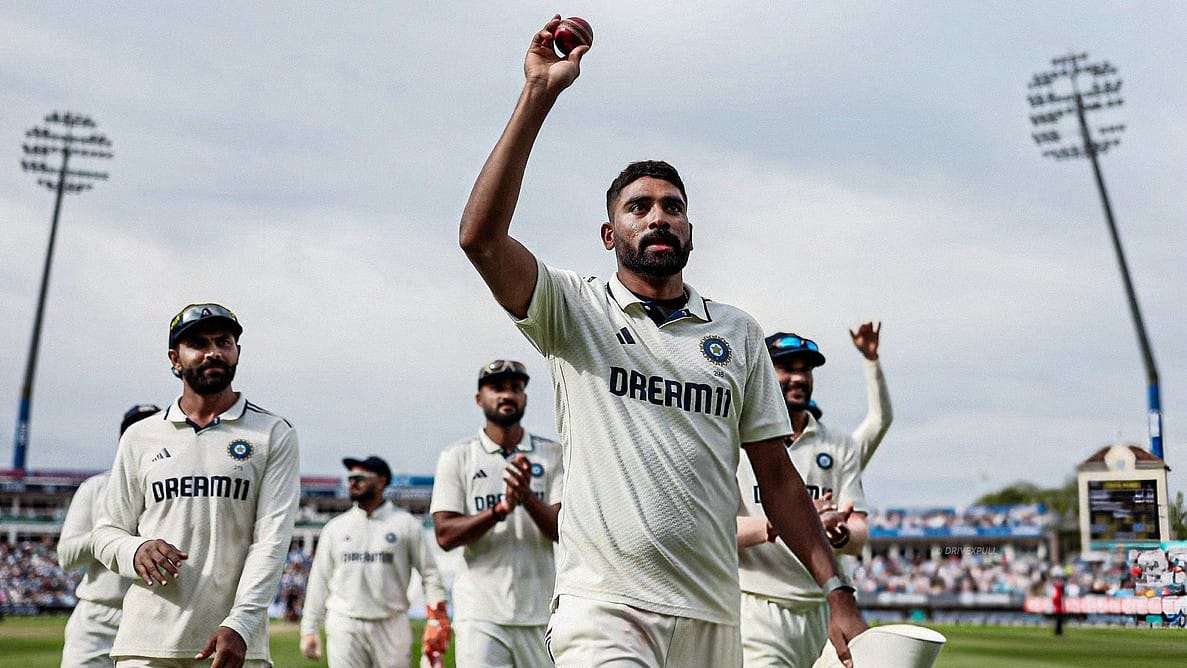
Siraj.
Sih-rahj.
Two syllables, and one man, that defined an Indian summer.
Nobody was talking about Mohammed Siraj. By the fourth of August, and the 25th day of an unforgettable summer of cricket, everybody was.
2. This Indian summer was not, this time, in Ireland. Neither was it in India.
It was on the green fields of England.
A series of placenames, rhythmic phrases holding history in the sounds they make.
Headingley. Edgbaston. Old Trafford. The Oval.
(Only Lord's stands apart in the three-syllable stakes, but stand apart is what Lord's does, what Lord's — close to the centre of London, on some of the world's most valuable ground, and the spiritual and the administrative home of the game of cricket for centuries — has always done.)
Back in June, the cricket world looked forward to that rarefied staple of an English year — rarefied, but threatened by the relentless need for brevity and instant gratification, and so maybe soon to be rare: five long Test matches against the tourists of Australia or India, the only countries now with enough deep tradition and enough commercial appeal to warrant it.
If, among the people who discuss cricket, talk turned to fast bowlers, three or four might have been on their minds and lips.
Mark Wood, whose presence and world-leading speed of delivery would be missed after a knee operation.
Jofra Archer, his fellow Englishman, who was on track to return to the Test team for the first time in four years after a series of injuries of his own.
Ben Stokes, of course, who manages, somehow, to mix top-class batting with 90 miles an hour bowling, and mix both with the responsibilities of the captaincy and all that the captaincy entails in the thin English air. (Such is the influence, and often the teeth, of the British media that the England football manager has long been regarded as the most pressured role in world sport, but the England cricket captain comes close. The England cricket captain has to field the same unanswerable questions and make similarly vital decisions, but unlike his counterpart on the football bench, he also has to perform inside the lines, or ropes, too.)
If an Indian paceman was to stand out, it would be Jasprit Bumrah.
Bumrah — with an awkward running gait and style of delivery that does nothing to prevent his ability to bowl unplayable ball after unplayable ball, and arguably enhances it — arrived in England as the world's top-ranked bowler, but a creaking body brought the pledge from his new captain Shubman Gill, before a ball had been bowled, that he would play no more than three of the five Tests.
Nobody was talking about Mohammed Siraj.
By the fourth of August, and the 25th day of an unforgettable summer of cricket, everybody was.
We’ve all been educated and socialised into good citizens. But that doesn't mean there's not a compelling pull, a primitive sort of energy, to occasions when lawlessness returns. There is some part of us, no matter what our logical brain would say, that wants it, that wants chaos and confusion and anarchy.
3. Allow me, for a moment, to talk of fighting. The American college of Notre Dame — pronounced not in the French way, but "Noter Day-m" — is situated in South Bend in Indiana. A town of 100,000 people, South Bend is known for little else but Notre Dame, and Notre Dame is known as the "Fighting Irish".
There's no clear and agreed upon reason why. Four of the clergymen who founded Notre Dame in the 1840s were Irish, so it could be that. Several decades later, local newspapermen were using the epithet to describe Notre Dame’s sports teams, not because of any notable Irish connection, but for the grit their players showed on the sports fields, and because "fighting" seemed to be seen by all as a particularly Irish trait.
For the best part of thirty years, Gaelic football — not cricket or American football — was my sport.
Played only in Ireland and in Irish emigrant communities overseas, and which first-time viewers might say looks a bit like soccer and a bit like rugby and a bit like both, Gaelic football has a long and proud — I use the word advisedly — history of Irishmen fighting.
Gaelic football was not something you chose. It chose you, by dint of your family, your address, your capacity to run and catch and kick and block. If you were of football-playing age and ability and you didn’t play, there was always something of the pariah that followed you round.
When I was 16 or 17, I played an under-21 match against a team from the Irish-speaking Gaeltacht. That day, it was accepted by all of us players, on both sides, our English-speaking townies and the buachaillí from Ráth Chairn, that sometime during the hour there would be a fight. The only thing to be decided was what would start it, and who and how many would take part.
One of the most famous episodes of modern Irish history — not just sporting history, but cultural history — took place on September 29th, 1996 when 27 men, 13 from County Mayo and 14 from County Meath, engaged in a spectacle of punching and pulling and kicking in front of the Hill 16 terrace at Dublin's Croke Park.
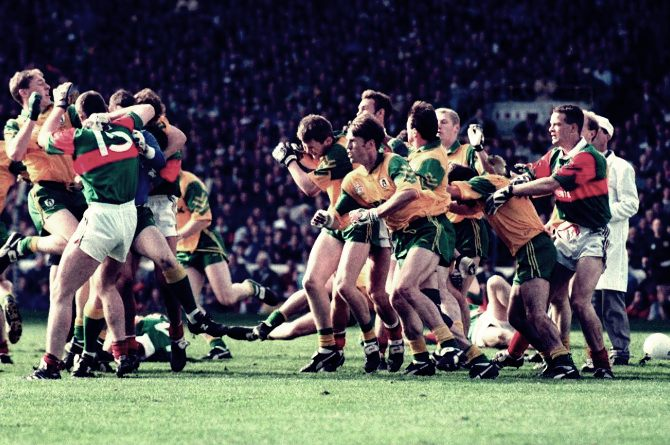
Croke Park's Hogan Stand is called after the Tipperary footballer shot dead by the British army on Bloody Sunday in 1920. Hill 16, the terrace that takes up one end of the ground, got its name in memory of the Easter Rising, the story being that the rubble of Dublin city, left by the bombardment from the British to quell the insurgency, was piled up here, where it became a viewing point for the games. That day in 1996, I was standing on the Hill, 18 years old and impressionable, 100 yards away from where the footballers of Meath and Mayo fought. This wasn’t just football I'd seen before. It was the type of football I’d been a part of all my life.
The Meath-Mayo brawl lasted maybe 30 seconds, but they were among the most energising 30 seconds of my life. The general consensus that day was that Meath, my county, won the fight and an hour later they won the match too, and that the first victory was a key ingredient in the second.
Many years later, I started a new job in Dublin, and a would-be colleague learned I was from Meath. He was from Mayo. His unhappiness that we would be sharing space was obvious. Without a word being said, we both knew the source of it: a few seconds of an afternoon all the way back in 1996.
In the three decades since that game, Gaelic football — at least the intercounty version, which takes place in the glare of television cameras and much pious TV and social media commentary — has been sanitised. Cleaned up. The ever-present video recording device, one in every pocket, means the fight now might have consequences where before there were none. But Gaelic football fights were common for decades. Some would argue they were central.
There was even a language around Gaelic football fights. The legendary radio and television commentator Micheál O'Hehir, whose voice for decades travelled thousands of miles over the airwaves to the ears of Irish men and women stranded forever overseas, had a specific word for situations like this.
He didn't call it a fracas or a brawl, even though brawl and fracas would have been fine and accurate. He called it a "shemozzle", an old Yiddish word for chaos or confusion.
No matter where you were listening from, if you were Irish and Gaelic football was important to you, whenever you heard the word shemozzle the one thing you weren't was confused. If you were Irish and listening to Micheál O'Hehir, you knew exactly what a shemozzle was. It was a row, a large one, involving perhaps an uncountable number of men on an Irish field where the result of a football match was on pause while egos and fists took centre stage, if only for a moment.
It is, perhaps, one of humanity's most towering achievements that most of us no longer live in lawlessness. The wild west and cannibalism and the barbarity of the savages are long gone. We’ve all been educated and socialised into good citizens. But that doesn't mean there's not a compelling pull, a primitive sort of energy, to occasions when lawlessness returns. There is some part of us, no matter what our logical brain would say, that wants it, that wants chaos and confusion and anarchy.
Irish people, maybe more than most. Even if half of us or more wouldn’t say boo to a goose, the “fighting Irish” moniker abides. Gaelic football still has a lawless undercurrent, especially when cameras are few.
About a mile from where I live, there’s an old farmhouse. For years there was a boxer’s heavy bag hanging there from the bough of a tree. I passed it recently, and the heavy bag was gone.
In its place was an Irish flag.
4.
Cricket is, always has been, always will be a non-contact sport. But India and England took non-contact to the limit over 25 days in 2025.
Two well-matched teams, compelled to spend days and days together in sporting combat, both sides happy, eager, to engage in the verbal abuse that goes by the innocent-sounding name of sledging, half-serious but fully-in-earnest and designed to throw the opponent off his game.
On one or two occasions when tension brought opposing players too close together there was — shock and awe and horror — a brushing of shoulders.
It was the closest cricket ever got to a shemozzle.
And Mohammed Siraj, smiling, villainous, smiling again, was at the centre of every beautiful bit of it.
Beneath those noble or logical aims, there is another level. It's the animal part of us, and we can never remove it and stay alive. It is without words. We struggle to say it, think it or describe it. We feel it in our veins.
5.
Results, in sport, don’t tend to matter as much as we think. Respect, wonder, awe and aura matter more. Sometimes those intangibles come through results. But in sport, and maybe in life in general, they often come from how you play much more than how you do in the end.
The cricket history books, the cricinfos and the Wisdens of the world, will show that the summer of 2025 Test series in England ended in a 2-2 draw. Two wins for the hosts, two for the visitors, one draw. (For the uninitiated, a draw in cricket is different from a tie. A tie — teams finishing exactly level — is all but impossible. Draws, in contrast, are common, coming when one of the teams is still batting when time runs out, unable or without hope of reaching their runs target; instead, hopes of victory gone, the next best thing is not to lose, and so they defend until the final day's final ball is bowled. Weather interruptions are a common factor in cricket draws.)
On the fifth morning of the fifth five-day Test match in seven weeks, a draw was the only result certain not to happen. As England’s last remaining batters closed in on the runs target of 374, it looked like the series would end 3-1 in their favour. To win the match and level the series at 2-2, India needed to get those tailenders out — including the slinged Chris Woakes, walking one-armed and grimacing to the centre after badly dislocating his shoulder earlier in the match.
Results matter, yes, but awe and aura matter more.
And after that dramatic final day, and after all the 24 that went before, all the players were surrounded in some of that awe and aura.
But Mohammed Siraj was cloaked in the stuff.
All might be fair in love and war and Gaelic football, but cricket was always different. There's even a well-known phrase for it. If something "isn't cricket", it's not fair, honest or moral.
Mutual respect still plays a role — teams routinely stand in two lines to applaud opponents on or off the field — but the game has been stretching the "isn't cricket" ethos for a century.
In the 1930s, the English tourists went to Australia and devised the "bodyline" theory to try to deal with the legendary batsman Donald Bradman. In 1991, the International Cricket Council saw fit to introduce a "one bouncer per over" rule — an "over" being six balls bowled by one bowler before a change of ends — because bowlers everywhere repeatedly "bouncing" fast balls in the direction of a batsman's head was having the predictable effect of unfairly undermining his performance.
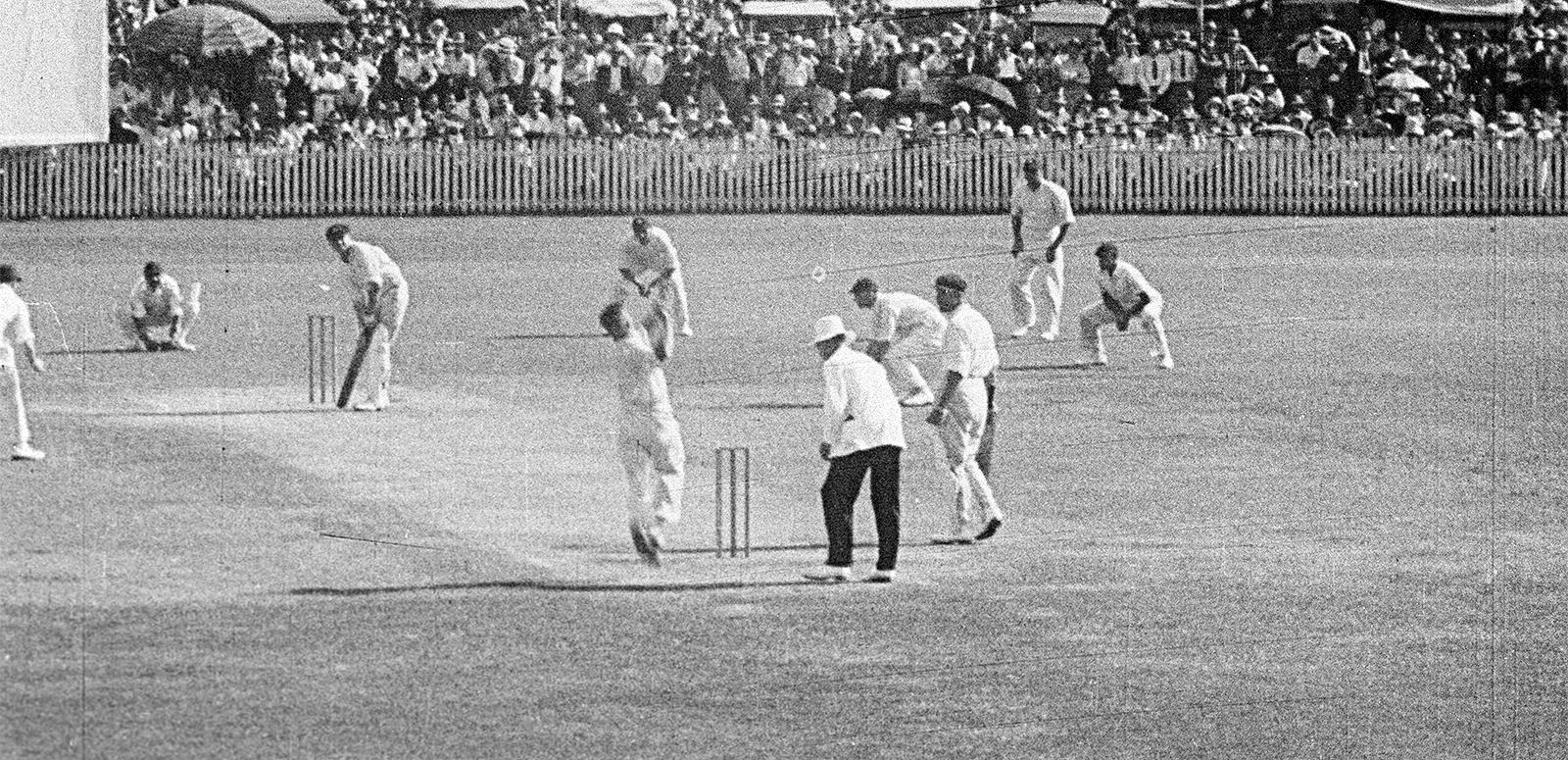
The dark art of sledging, deliberately insulting or verbally intimidating an opposing batter, was well-established long before England-India 2025. More tangibly, bowlers have been accused of bowling illegally for extra speed and accuracy, and there have been high-profile scandals of players using hidden sandpaper to make a ball behave erratically.
Respect is a spectrum. Game circumstances can ratchet up the tension, and players will often take the opportunity — even if it strictly "isn't cricket" — to ratchet it up even more. It may be proudly non-contact, but to play cricket at the highest level and succeed, you need a hard outer skin.
While all these things — bodyline, bouncers, sledging, sandpaper — might contravene the spirit and often the laws of cricket, still they are an essential element of it. A game is always at once both the rules and the ways of getting around the rules. Gaelic football fights might be much rarer now, but go to any local club match on an autumn weekend and you will still feel the edge and the undercurrent. It might now be a promise or a pledge more than its physical manifestation, but it's still there. If it's not, something vital is missing.
This edge is, in part, what makes sport so compelling. We might say we care about the partisanship of fandom and the too rare joy of being on the winning side. We might think we want to witness a great performance or savour a spectacle. But beneath that, there is another level. It's the animal part of us, and we can never remove it and stay alive. It is without words. We struggle to say it, think it or describe it, but we feel it in our veins. When we don't, the thing going on before us or around us matters that much less. If we don't feel it, that thing might not really matter at all.
Every time I turned on the television and Siraj was filling the frame, I felt it. It was rippling out of him and through him. He seethed, and still he smiled, never seemed to stop smiling. His smile had the strange effect of adding heat and taking it away all at the same time. He smiled in happiness. He smiled in despair. He smiled even as he raged.
Mohammed Siraj showed up, didn't hold back, and made a summer matter. I can think of no greater praise.
It was beautiful to witness in the way all great rivalries where neither side can ever win for good are beautiful to witness, and it stops being a rivalry, and it stops being beautiful, the moment the seesaw tilts out of balance and one side does.
6.
Critics of Sky Sports might accuse it of being a corporate behemoth, and the accusation is a fair one. Built by Rupert Murdoch and his underlings, it has perfected the art and science of separating ordinary people everywhere from their cash — often hundreds of euros or pounds, by direct debit every month. Sky Sports is brilliant at business, but what is less appreciated is that it's also brilliant at creating indispensable value in return.
Its cricket statisticians, led by the never-on-screen Benedict Bermange, produce graphics and charts and stats that always manage, and without contrivance, to render the game and its moments more meaningful.
At one point in the final EngIand-India Test match of 2025, when Siraj was leading the Indian attack and his teammate Jasprit Bumrah, the world’s top bowler, was enjoying a game off, the stats and graphics people presented two numbers: Siraj’s bowling average (the number of runs he allowed for each batsman he got out) playing alongside Bumrah, and his average when Bumrah was absent.
There was a stark difference between the two numbers. When Bumrah played, Siraj was pretty good. When Bumrah was absent, Siraj was borderline brilliant.
The commentators discussed the reasons why. Without Bumrah in the team, Siraj became the main bowler, and the main bowler typically got more overs with the newer (and more dangerous) ball, and more overs against the lesser-skilled tailenders, and so a better average might be expected.
But statistics always tell only part of a story. Statistics cannot tell of the heart, or the gut, or the instinct. It cannot tell the story of the emotions that course through the veins.
Siraj is all emotion.
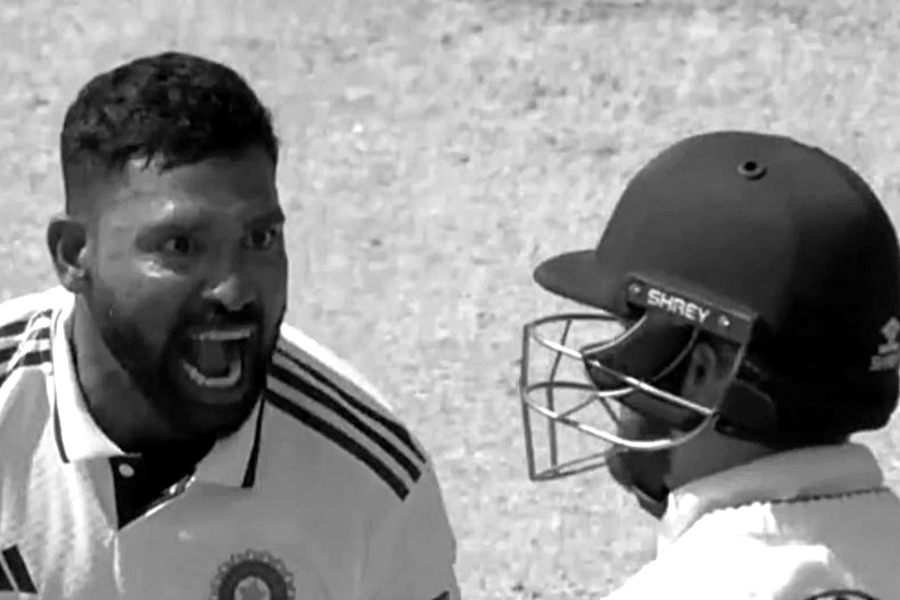
You can’t live your life exclusively on emotion and hope to avoid the downsides that such feeling inevitably brings with it.
But peak performance is not 40 hours a week, on a daily schedule. You can be consistent, sure, and consistency is a virtue. Peak performance, though, is something beyond consistency. It’s somehow finding a level that might have been beyond you, somewhere the logical mind says is nigh on impossible. Peak performance is emotion distilled into glory.
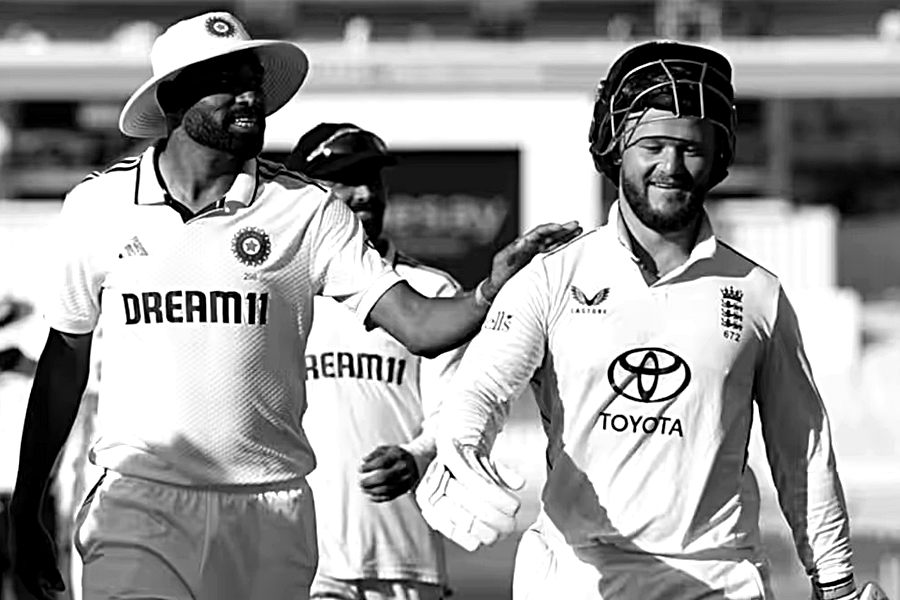
Siraj’s rivalry with the England opening batsman Ben Duckett was built on this type of peak performance, and it was glorious and beautiful to witness. Right throughout the series, each won and each lost, but it wasn’t the losing and the winning that was most important. Most important was that they still showed up — Siraj with the ball, Duckett with the bat — each certain only that in the short term, something binary would happen: they would win today against the other, or they would lose.
Each man brought emotion to bear in trying to pull down the peak performance of the other, and succeeded only in guaranteeing it.
It was beautiful to witness in the way all great rivalries where neither side can ever win for good are beautiful to witness, and it stops being a rivalry, and it stops being beautiful, the moment the seesaw tilts out of balance and one side does.
In the same way a happy life must include grief, and a life without grief cannot be truly happy, beauty is only truly beauty when it also contains pain, or tragedy, or despair.
7.
Beauty needs symmetry. Attractiveness only becomes beauty when it contains something that seems, on the face of it, its opposite. In the same way a happy life must include grief, and a life without grief cannot be truly happy, beauty is only truly beauty when it also contains pain, or tragedy, or despair. The poet John Keats wrote, in a line that has been debated now for two centuries, that "beauty is truth, and truth beauty". What is truth if not often harsh? What is truth if not often hurtful?
So it shouldn't be a surprise that of the three moments from this Indian summer, the summer of Siraj, that are indelible in my mind, two of them are Siraj in heartbreak.
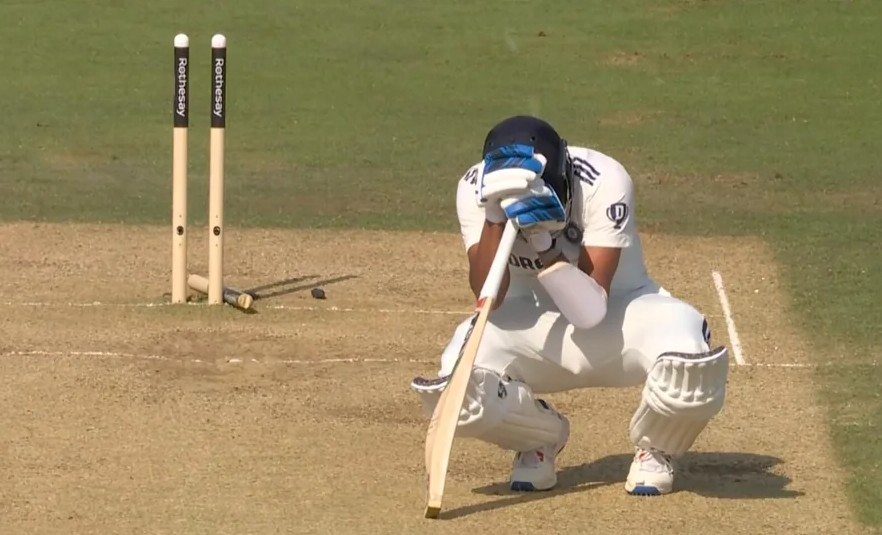
The first was at the end of the 3rd Test at Lord's, when Siraj — the specialist bowler now turned Number 11 batter — manned the non-striker's end for hours as his teammate, the all-rounder Ravindra Jadeja, tried to eke out the runs needed for India to win. Siraj is the embodiment of the stereotypical Number 11. In 57 Test match innings with the bat, he has scored just 151 runs, less than 3 runs per innings. They had no chance. They were nine wickets down, one to go. They needed 46 runs to win.
If they were to do the impossible, Jadeja would do most of the scoring. Siraj’s job was not to score. His job was not to get out — simple, but almost impossible against an England bowling attack in need of one more out to win. For more than two hours, Siraj blocked and blocked and blocked, occasionally scampering to the other end whenever Jadeja scraped out one more run. For a while India were averaging a single run an over, as Jadeja and Siraj tried to hang around long enough to get over the line. It would have been a stunning turnabout if Siraj the world-class bowler could win a game after hours as Siraj the low-class batter.
It didn't happen. With four catchers close in and the wicket-keeper up to the stumps, a ball from England spinner Shoaib Bashir was successfully blocked — again — by Siraj. Successfully, but not safely. The ball spun off the face of the bat. Watching from a TV screen and oceans away, you could feel Siraj's alarm, and then despair, as the ball turned and rolled and spun backwards, flicking the timber and dislodging a single bail, sending 11 England players screaming around the field in celebration.
The second moment was on the fourth day of the final Test. Harry Brook, the England batsman who has, as much as anyone else, embodied the spirit of "Bazball", the high-risk-high-reward batting philosophy under head coach Brendan "Baz" McCullum, was in the centre. When Brook gets his eye in, he can slap the ball high and far. He hits sixes with the same glee and boredom as a cat licking an ice-cream. With three batsmen already out and more than 250 runs still to go, dismissing Brook would be a major step towards winning the game and saving the series. On 19, Brook hooked a high shot over his shoulder. Siraj was waiting in the deep to take the catch. He took it, no problem there, but he lost his bearings and stepped over the boundary. Brook was reprieved, and six runs added to his score. He went on to get 111 to put England within touching distance of the win. His success was tied to Siraj's failure, and Siraj wore every mark of it on his face.
The third moment, and fittingly the one which brought Siraj from despair to glory and etched the whole thing in the beauty of both, came the following morning. Each of the five Test matches had gone the distance, and on the morning of the final one, England had a target of just 37 more runs to win, with three wickets in hand to get them. But India had Siraj, and Siraj had the emotion of everything inside him. Jamie Overton went, to Siraj's bowling, and Josh Tongue followed, leaving the last stand as Gus Atkinson — a full-time bowler, but a capable batter too — and Chris Woakes in grimace and sling.
With Atkinson doing a fine job of keeping his completely compromised batting partner off strike, England's target dropped to 15, then to 10. With just seven runs left, Siraj found the perfect delivery, arced in at pace, beating the batter's stroke and slapping the off-stump out of the ground. "Would you believe it," gushed Sky commentator and former England batsman Michael Atherton, "it's Mohammed Siraj!"
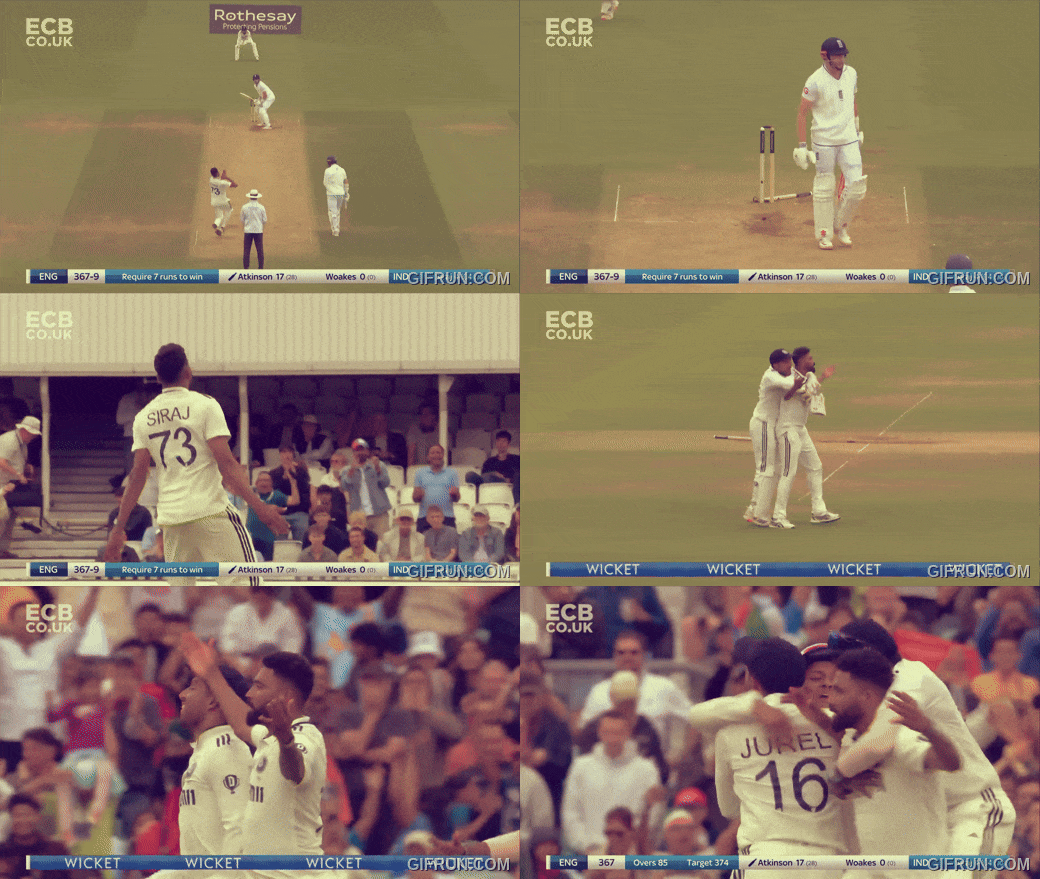
Would you believe it was him, Michael?
Michael ... who else could it be?
It had to be Siraj. The summer was his.
In the best way possible, with cunning and devil and beauty and joy, he made the summer his.
Cricket pavilions have a fine tradition of recording great moments in statistics etched in wood panelling and framed pictures hung solemnly from their walls.
Mohammed Siraj's summer could belong there, no doubt. But you feel it's at home somewhere more important than all that: in the minds and the hearts and the veins of all who were lucky enough to watch it, whether you were Indian, English, or just a sentimental old Irishman whose blood quickens at the sight of a fight.
By Shane Breslin